
Best Sports Photography Delivery Software in 2026
Compare the essential features of sports photography delivery software in 2026, from large-gallery performance and AI face search to downloads, privacy, and lead generation.
What Sports Photographers Need From Delivery Software in 2026
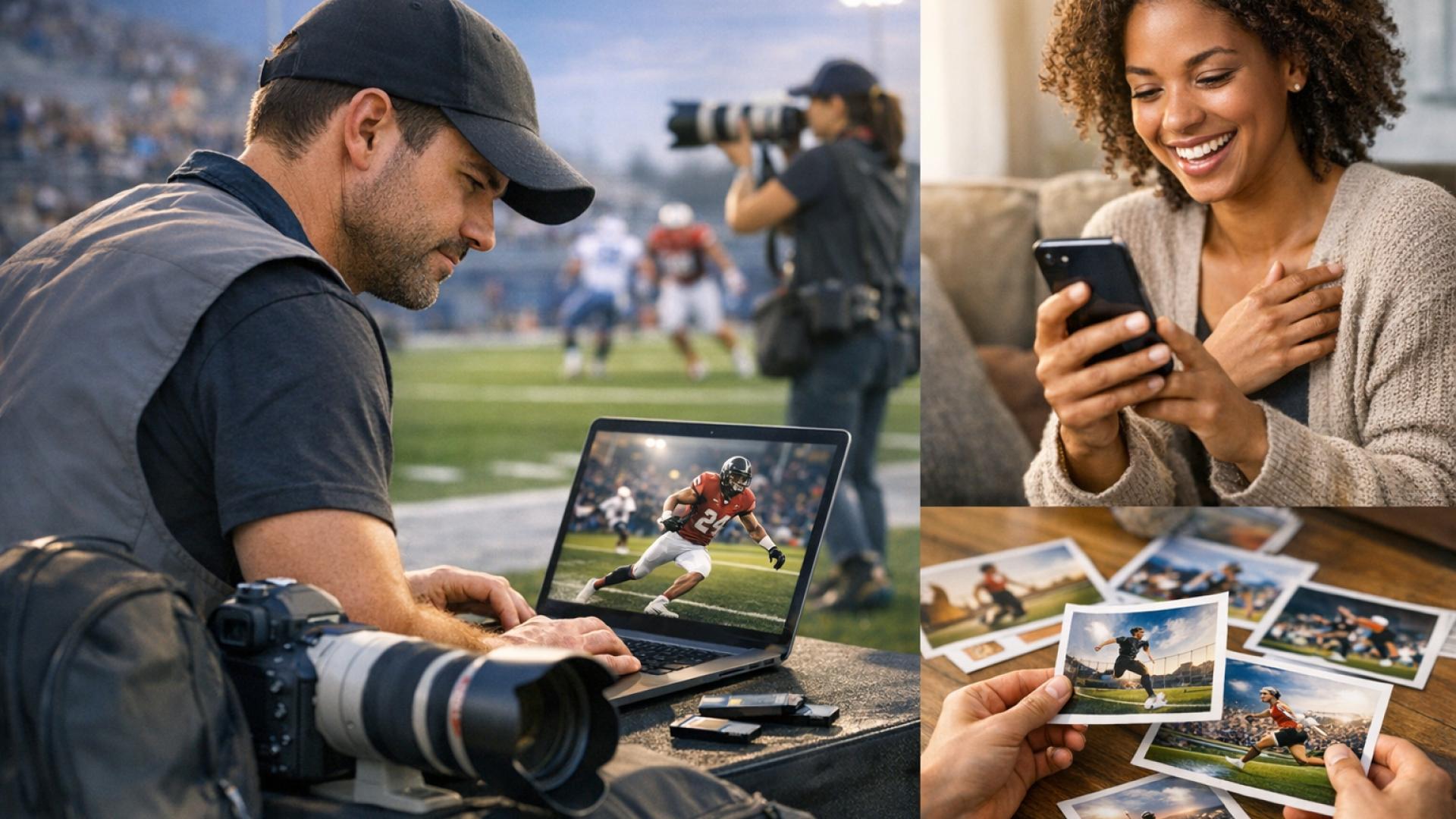
Sports photography creates a delivery challenge that ordinary client galleries were not designed to solve. A wedding client may browse one event once or twice, but a tournament gallery can contain thousands of images featuring hundreds of athletes, coaches, and families. Everyone wants to find their photos quickly, often from a phone while the event is still fresh.
The best sports photography delivery software in 2026 should do more than host files. It should organize large galleries, make individual images easy to discover, support fast downloads, and turn interest from athletes and parents into future business opportunities.
A strong platform should help with the full experience after the shutter clicks:
- Simple uploading and organization for high-volume shoots
- Fast, mobile-friendly gallery browsing
- AI-powered face recognition to help people find themselves
- Easy delivery and downloads
- A professional, photographer-branded client experience
- Lead-generation tools for reaching potential customers
- Privacy controls appropriate for the event and audience
Why Traditional Gallery Browsing Falls Short for Sports
Imagine delivering 8,000 photos from a weekend tournament. A parent may only care about the 20 or 30 images featuring their child. If the gallery requires them to scroll through every game, team, and sequence, the experience quickly becomes frustrating.
Folders organized by team, match, bib number, or time slot can help, but they require extra work and are not always enough. Athletes may play in multiple games, jersey numbers can be obscured, and family members may not know exactly when a photo was taken. Manual tagging can also become impractical as event volume grows.
Every unnecessary step reduces engagement. When visitors cannot find relevant photos within a few minutes, they are more likely to leave without downloading, sharing, purchasing, or remembering the photographer behind the gallery.
AI Face Search Changes the Gallery Experience
AI-powered face search offers a more personal way to navigate a large sports gallery. Instead of browsing thousands of unrelated images, a visitor can use a selfie to find photos in which they appear. This is especially useful for races, tournaments, school competitions, martial arts events, dance competitions, and other high-volume assignments.
For photographers, this can reduce the need to manually separate every athlete into an individual gallery. For visitors, it makes photo discovery feel immediate and relevant. A parent can focus on images of their athlete, while players can find action shots, team celebrations, and candid moments they might otherwise miss.
Fototag combines gallery delivery with AI-powered find-yourself search, helping guests move from a large event gallery to their own photos faster. That convenience can increase gallery participation and make the photographer’s service more memorable.
If you regularly photograph tournaments, races, or other large events, try Fototag for free and test the experience with one of your own galleries.
The Most Important Features to Compare
No single feature determines whether a platform fits your business. Before choosing sports photography delivery software, compare how each option handles your real workflow, expected gallery size, audience, and business model.
- Search and discovery: Can athletes and families locate relevant photos without endless scrolling?
- Large-gallery performance: Does the experience remain fast and usable when a shoot contains thousands of images?
- Mobile experience: Can visitors search, browse, and download comfortably from a phone?
- Organization: Can you arrange images by event, date, team, game, category, or another useful structure?
- Download workflow: Are download steps clear for both individual images and larger selections?
- Brand presentation: Does the gallery reinforce your photography business rather than feel like a generic file folder?
- Lead capture: Can interest from gallery visitors become useful, permission-based business contacts?
- Privacy: Can you select gallery access settings that fit public events, private teams, and youth sports?
- Ease of setup: How much administrative work is required before a gallery is ready to share?
- Scalability: Will the platform continue to suit your workflow as you cover more teams and larger events?
Delivery Software Can Also Support Marketing
A sports gallery is often seen by far more people than the person who originally hired you. Athletes, parents, coaches, club organizers, sponsors, and spectators may all visit. That makes delivery an important marketing touchpoint, not just the final administrative step in a job.
When the gallery is fast and easy to use, visitors associate that experience with your brand. They may share photos, recommend you to another team, ask about individual sessions, or contact you about covering a future event. A slow or confusing gallery creates the opposite impression, even if the photography itself is excellent.
Fototag includes tools designed to help photographers generate new leads from gallery activity. This can be valuable for sports photographers who want to turn one tournament into relationships with more athletes, families, teams, and event organizers. Lead collection should always be transparent, permission-based, and consistent with applicable privacy and marketing rules.
Privacy Matters, Especially in Youth Sports
Sports photographers should consider privacy before publishing any gallery, particularly when minors are involved. The appropriate setup depends on the event, organizer, location, audience, and agreements in place. A public community race may require a different approach from a private school competition or youth team session.
Confirm expectations with the organizer before the event. Discuss who may access the gallery, whether images can be shared publicly, how participant consent is managed, and whether any athletes must be excluded. Use suitable access controls and communicate clearly about any face-search feature. Photographers should also review applicable privacy, biometric data, school, sports association, and child-protection requirements in the regions where they work.
Convenience should never replace informed, responsible gallery management. The best delivery workflow balances easy photo discovery with thoughtful access and clear communication.
A Practical Sports Gallery Workflow
The right software works best when it is part of a repeatable process. Build a workflow that begins before the event rather than deciding how to deliver thousands of photos after editing is complete.
- Ask the organizer about the event schedule, participant groups, access requirements, and gallery permissions.
- Create a consistent folder and file-naming system for teams, games, heats, or competition categories.
- Cull efficiently, remove obvious duplicates, and apply consistent edits before uploading.
- Upload the gallery and test it on both desktop and mobile devices.
- Check that search, browsing, and download instructions are clear to a first-time visitor.
- Provide the organizer with a simple gallery link and suggested sharing message.
- Review engagement and inquiries to learn which events and audiences create the most opportunity.
- Archive files according to your stated retention policy and client agreement.
This process reduces confusion for clients and makes high-volume delivery easier to repeat. It also gives assistants or studio team members a documented system to follow during busy seasons.
How to Test a Platform Before Committing
Feature lists only reveal part of the experience. The best way to evaluate delivery software is to upload a realistic gallery rather than a small collection of portfolio favorites. Use enough images to reproduce the volume and variety of a normal sports assignment.
Open the gallery as if you were an athlete or parent. Try to locate one person, browse on mobile data, select several images, and complete a download. Ask someone who has never used the platform to do the same without your help. Their questions will reveal where the experience is intuitive and where instructions may be needed.
Also measure the photographer side of the workflow. Note how long uploading, organizing, publishing, and sharing take. A platform that saves each visitor a few minutes is valuable, but one that also saves you hours across every tournament can have a much larger effect on profitability.
The Best Choice for High-Volume Sports Photography
For photographers who only deliver small team sessions, a basic online gallery may be sufficient. For tournaments and large sporting events, however, photo discovery becomes one of the most important parts of delivery. Visitors should not have to search manually through thousands of images to find a handful that matter to them.
Fototag is a strong choice for sports photography in 2026 because it brings together gallery organization, fast delivery, AI-powered find-yourself search, downloads, and lead-generation tools. It is designed to make large galleries more personal for visitors while giving photographers a more useful delivery and marketing workflow.
The best platform is ultimately the one that fits your assignments, protects your clients, saves time, and makes every athlete’s photos easier to find. Try Fototag for free with a real sports gallery and evaluate the experience from both sides of the camera.
Read more: Why Selfie Search is a Game-Changer for Wedding Galleries
Read more: Stop Losing Engagement - Why Guests Don’t View Wedding Galleries
Read more: How Wedding Galleries Can Generate New Photography Clients