
How Selfie Search Helps Sports Photographers Deliver Photos
Learn how AI-powered selfie search helps sports photographers organize large event galleries, speed up photo discovery, improve client delivery, and create more opportunities for engagement and leads.
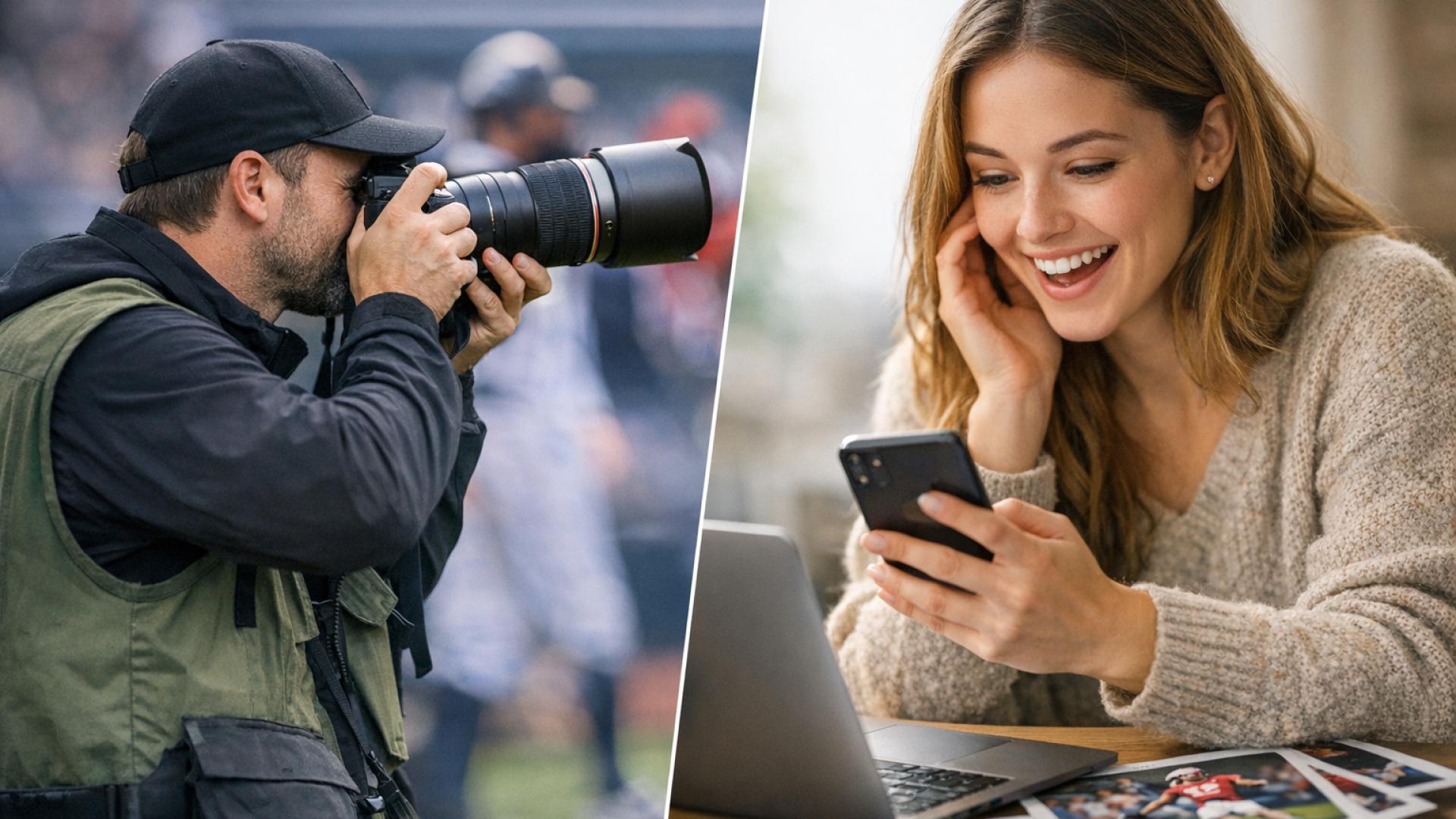
Sports photography creates a unique delivery challenge: one event can produce thousands of images featuring hundreds of athletes, families, coaches, and supporters. Traditional galleries make viewers scroll through page after page to find the few photos that matter to them. Selfie search changes that experience by helping each person quickly locate their own images.
For sports photographers, easier discovery is not simply a convenient extra. It can reduce delivery questions, increase gallery engagement, create more sales opportunities, and make professional coverage more valuable to event organizers.
Why large sports galleries are difficult to navigate
A wedding client may be happy to browse an entire gallery, but sports participants are often looking for something specific: photos of themselves or their child. Finding those images manually can be difficult when athletes wear similar uniforms, move between locations, or appear among large groups.
Bib numbers can help at races, but they may be folded, covered, blurred, or missing from side and rear angles. Team and jersey numbers are also imperfect identifiers, especially across multiple age groups or clubs. Manual tagging can improve organization, but labeling thousands of images adds significant work after an already demanding shoot.
When finding a photo requires too much effort, many visitors leave before they reach the best images. That means lower engagement for the event and fewer download, sharing, and sales opportunities for the photographer.
How selfie search works for sports photo delivery
Selfie search gives gallery visitors a faster path to relevant photos. A visitor uploads or takes a selfie, and AI-powered face recognition searches the gallery for images featuring that person. Instead of browsing thousands of files, the visitor receives a personalized selection to review and download.
This approach can be particularly useful for sports in which faces remain visible, including basketball, volleyball, tennis, gymnastics, swimming, martial arts, dance competitions, and many running events. It can also find athletes in warm-ups, award ceremonies, team portraits, sideline moments, and candid photos that identifier-based systems may overlook.
Selfie search does not replace thoughtful editing or gallery organization. Rather, it adds a discovery layer that helps every participant navigate a large collection according to what matters most to them.
Benefits for sports photographers and their clients
- Faster photo discovery: Athletes and parents can reach relevant images without scrolling through an entire event gallery.
- Less manual sorting: Photographers can avoid creating a separate folder for every participant or spending hours applying individual tags.
- Higher gallery engagement: A personalized result gives visitors a clear reason to explore, favorite, download, and share photos.
- Better coverage visibility: Viewers can discover candid, celebration, podium, and team images they might have missed through bib or jersey searches.
- A more professional experience: Fast, intuitive delivery strengthens the value photographers offer to teams, leagues, schools, and event organizers.
- More business opportunities: When guests can easily find strong photos of themselves, they are more likely to remember the photographer and inquire about future events or portrait sessions.
Want to make large sports galleries easier for every athlete and family to explore? Try Fototag for free at https://fototag.cloud/register
A smoother workflow after the final whistle
The delivery process begins with a well-planned upload. Cull obvious misses, apply consistent edits, and organize files into practical sections when needed. For example, a tournament gallery might include separate collections for each day, field, court, or ceremony. Broad organization gives visitors context, while selfie search handles personalized discovery within those sections.
With Fototag, photographers can upload sports galleries and provide AI-powered face search without manually separating images for every person. Athletes take or upload a selfie, see their matches, and access the photos available to them. Fast downloads then keep the experience moving once they have found their favorites.
This workflow is useful when photographing a full league, school athletics program, race, tournament, or multi-day competition. It lets the photographer deliver one well-presented gallery while still giving each visitor an experience that feels personal.
Ways to introduce selfie search at an event
Even the best search tool needs a clear invitation. Tell participants that professional photos will be available and explain that they can use a selfie to find themselves. Include the gallery address or QR code in event emails, registration materials, venue signs, result pages, and social posts.
Keep the instructions short. A message such as “Open the gallery, take a selfie, and find your event photos” is easier to understand than a long explanation of the technology. If you are working with an organizer, provide ready-to-use text and graphics so the gallery can be promoted consistently.
You can also keep branding visible throughout the delivery experience. When athletes, parents, and supporters share their images, your gallery becomes a natural introduction to potential clients who may need team portraits, senior sessions, tournament coverage, or photography for another sporting organization.
Privacy and trust still matter
Sports galleries may include children, schools, clubs, or private competitions, so photographers should treat privacy as part of the delivery plan. Confirm the organizer’s requirements, use appropriate gallery access settings, explain how visitors can search, and avoid making promises that do not match your platform or agreement.
For youth events, coordinate with the school, league, or organizer before publishing. Make sure your contract covers image delivery and promotion, and provide a clear contact path for access questions or removal requests. A convenient gallery should also feel responsible and trustworthy.
Measure more than delivery speed
Selfie search can save time, but its wider value comes from helping more people connect with your work. After each event, review gallery visits, searches, downloads, inquiries, and any available sales data. Compare those results across different sports and promotion methods to learn where engagement is strongest.
Also pay attention to recurring questions. If visitors cannot find the search option, make it more prominent in your event communication. If traffic is low, ask the organizer to resend the gallery. If athletes engage but do not take the next step, simplify your download or inquiry process.
Turn a crowded gallery into a personal experience
Sports photographers do not need to choose between efficient delivery and a personalized client experience. Selfie search allows one large gallery to serve hundreds or thousands of people while helping each visitor quickly focus on their own moments.
By reducing endless scrolling, simplifying post-event organization, and making photos easier to discover, selfie search helps photographers deliver greater value to athletes and organizers. It also gives every gallery more potential to generate sharing, referrals, leads, and future bookings.
Give athletes a faster way to find the moments you captured. Try Fototag for free at https://fototag.cloud/register
Read more: Best Sports Photography Delivery Software in 2026
Read more: Why Selfie Search is a Game-Changer for Wedding Galleries
Read more: How Wedding Galleries Can Generate New Photography Clients